

The Canvas breach, the largest student data privacy disaster in history, has exposed the massive risks of our centralized EdTech systems. We also explore the “Great Divides” shaping our digital future. This divide isn't just about security; it's also about wealth and access. While AI specialists at companies like OpenAI are cashing in "lottery tickets" worth millions, a widening socio-economic gap is transforming the very cities these tech giants call home. Meanwhile, behemoths like Microsoft are pledging billions to bridge the global AI divide, but is it about equity, or just expanding their reach? Let’s dive in and, as always, stay curious
📰 AI News and Trends
🧰 AI Tools - 20 Essential Tools for Small Business
💰 A New Class of Millionaires expanding the AI divide
📚 Learning Corner - AI Agents Full Course 2026 (2 Hours)
🌐 To Close the “AI Divide,” Microsoft Pledges $50B.
📰 AI News and Trends
The cloud services company Akamai is the latest to sign Anthropic as a customer (a deal worth $1.8 Billion), extending gains to trade up over 25% following the news.
Nvidia agreed to invest up to $3.2 billion in glass maker Corning and signed a deal for the right to invest up to $2.1 billion in data center operator IREN. The company now has over $40 billion in its investment bets.
Coursera and Udemy have completed their merger, creating a massive online learning platform built for workers and employers, just as AI changes the skills needed for nearly every job.
NVIDIA and PulteGroup are partnering with startup Span to install mini data centers on the walls of new homes. Each unit packs 16 Nvidia Blackwell GPUs, 4 AMD EPYC CPUs, and 3TB of RAM and taps unused home electrical capacity to run AI inference workloads. The question is, what unused electricity? Don’t we pay for what we use? And aren’t these expensive data centers loud and attractive to thieves?
ByteDance boosts 2026 capex by 25% due to AI and memory costs
In Cannes, Mathieu Kassovitz, the French director behind the 1995 film La Haine, predicted that “in two years from now nobody will care” whether characters on screen are human or generated by AI.
Lime, the Uber-backed electric scooter and bike-sharing company, filed for an IPO after years of pivoting and restructuring.
The “public” data we leave behind has become a searchable goldmine for AI surveillance. LLMs can now instantly analyze bulk data to identify patterns, sentiment, and personal identities with startling accuracy. Our entire public digital footprint is now an open book that can be summarized and profiled by employers or governments, far outpacing current privacy laws.
💰A New Class of Millionaires expanding the AI divide
A massive financial “divide” is opening up in tech. OpenAI recently allowed over 600 employees to sell a collective $6.6 billion in shares, all before the company had even gone public.
The Highlights:
Instant Wealth: Roughly 75 employees walked away with $30 million each after the company tripled its “selling cap” for staff.
100x Returns: Early employees saw their stock value grow 100 times over in just seven years, crushing the performance of the regular stock market.
The Talent War: To keep up, rivals like Meta are offering top researchers $300 million pay packages.
The “San Francisco Effect”: This sudden surge of “AI money” is spiking local rents and creating a massive wealth gap in the city.
As AI compensation hits unprecedented heights, the gap between tech “elites” and everyone else is widening faster than ever. Developers and researchers looking for work in the industry want to land that lottery ticket where they can cash out on stocks as well as get a 6-figure salary. The concentration of these companies in certain metros is making those cities more unequal, leading to serious socioeconomic complications.
📚Learning Corner
AI Agents Full Course 2026 (2 Hours) - This 2026 YouTube course covers how to build and deploy agentic AI systems, with all course files freely available.
To Close the “AI Divide,” Microsoft Pledges $50B.
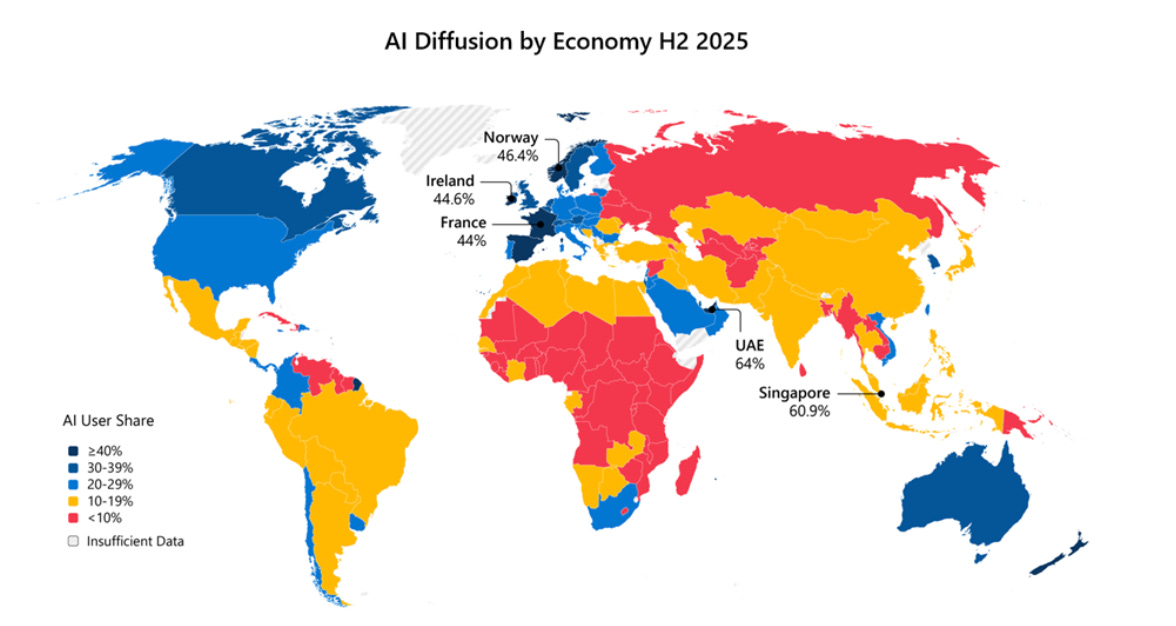
At the 2026 India AI Impact Summit, Microsoft leaders Brad Smith and Natasha Crampton warned us that AI usage in the “Global North” is currently twice as high as in the “Global South.” To prevent a new era of economic inequality, Microsoft is committing $50 billion by 2030 to bridge this gap.
The Plan
Building the Grid: As we have been hearing, it’s about power. Microsoft is building massive datacenter hubs in Mexico, Africa, and India, while aiming to bring internet access to 250 million people in underserved areas.
The “Elevate” Skilling Surge: They are launching Elevate for Educators, a program to train 2 million teachers in India alone. Globally, the goal is to help 20 million people earn AI credentials by 2028.
Beyond English: Most AI is “English-first,” which leaves billions behind. Microsoft is investing in projects like LINGUA Africa to make AI work fluently in local languages and cultural contexts.
Real-World Tech: AI isn’t just for chatbots. New initiatives use satellite data to help farmers in Kenya and India predict food security and manage water usage more efficiently.
Microsoft is betting that AI will be the biggest “catch-up” opportunity of the 21st century. For students, this means a massive expansion of the global tech workforce and a shift toward localized, multilingual AI that goes far beyond Silicon Valley.
The goal is to move AI from a “luxury tool” to a “universal utility” like electricity.
🧰 AI Tools of The Day
AI Top 20 Tools Playbook 2026 - 20 Essential Tools for Small Business
Biggest Student Ransomware Ever
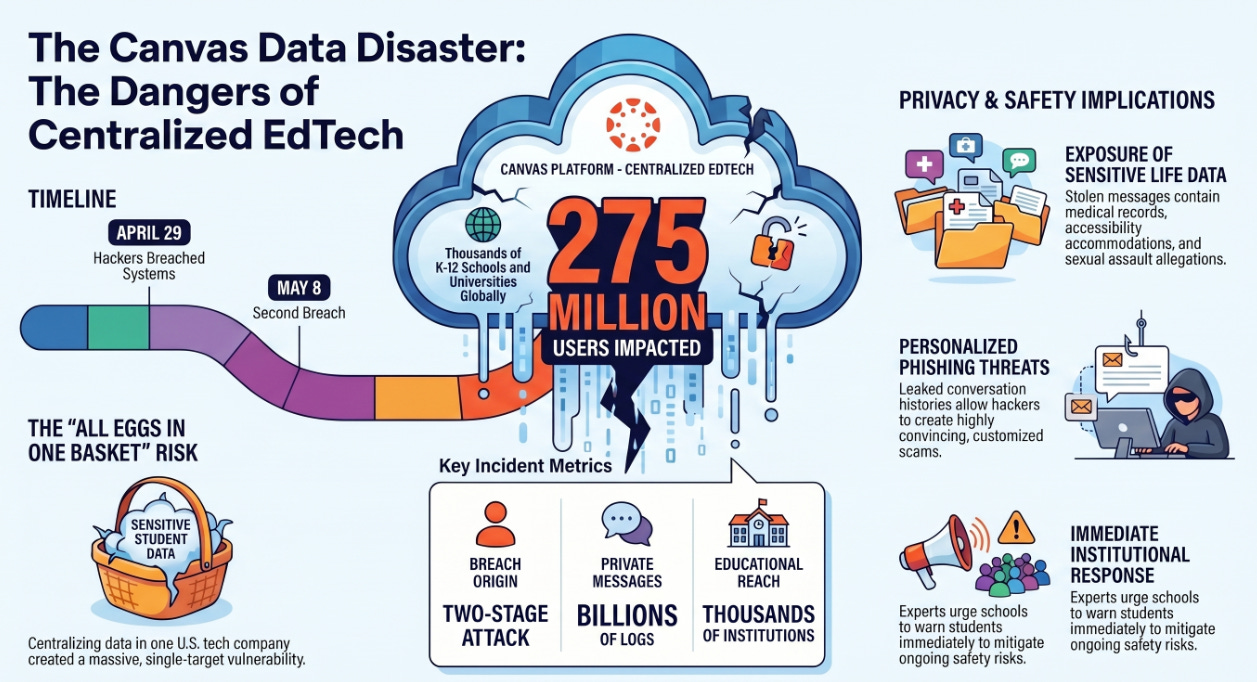
The recent ransomware hack of Canvas is being called the “biggest student data privacy disaster in history,” affecting over 275 million users across thousands of schools.
Beyond typical info like IDs and emails, the breach exposed billions of private messages that often contain highly sensitive details, including medical disclosures, sexual assault allegations, and accessibility accommodations. This disaster highlights the “all eggs in one basket” danger of centralized EdTech, as a single vulnerability at parent company Infrastructure allowed hackers to lock students out of their own education while potentially weaponizing their most personal conversations for future phishing attacks.