

Can AI really eliminate 200K jobs while companies stay competitive? What does this mean for workers, the economy, and the role of government? Should AI be regulated, and if so, how? In today’s issue, we break down the numbers, the risks, and what it all means for the future of work.
Let’s get into it. Stay curious.
AI Study of 81,000 People Reveals a Paradox We All Feel
🧰 AI Tools - AI Labor Market Dashboard
AI Is Cutting 200,000 Jobs as Banks and Big Firms Go All-In on Automation
📚Learning Corner - Core Policy + Analysis
The AI Regulation War Has Begun in the U.S.
Subscribe today and get 60% off for a year, free access to our 1,500+ AI tools database, and a complimentary 30-minute personalized consulting session to help you supercharge your AI strategy. Act now, as it expires in 3 days…
📰 AI News and Trends
Chinese electronics and car manufacturer Xiaomi surprised the global AI community today with the release of MiMo-V2-Pro, a new 1-trillion-parameter foundation model with benchmarks approaching those of U.S. AI giants OpenAI and Anthropic, but at around a seventh or sixth the cost.
Val Kilmer Resurrected by AI to Star in ‘As Deep as the Grave’ Movie.
Mistral bets on ‘build-your-own AI’ as it takes on OpenAI, Anthropic in the enterprise.
Sony Music says it has requested the removal of more than 135,000 songs by fraudsters impersonating its artists on streaming services.
Meta confirmed a critical security incident after an internal rogue AI agent’s actions led to the exposure of sensitive data to employees without authorization
Other Tech News
Robinhood Social, its new social network, is now rolling out in beta to a select group of users, who can trade right from their feed.
The FBI is buying up information that can be used to track people’s movement and location history, Director Kash Patel said during a Senate hearing Wednesday.
Google has been rebuilding its relationship with the Defense Department and is poised to benefit as it sidesteps competitors’ controversies.
Meta will pay Instagram, TikTok, and YouTube creators with big followings to post on Facebook
AI Study of 81,000 People Reveals a Paradox We All Feel
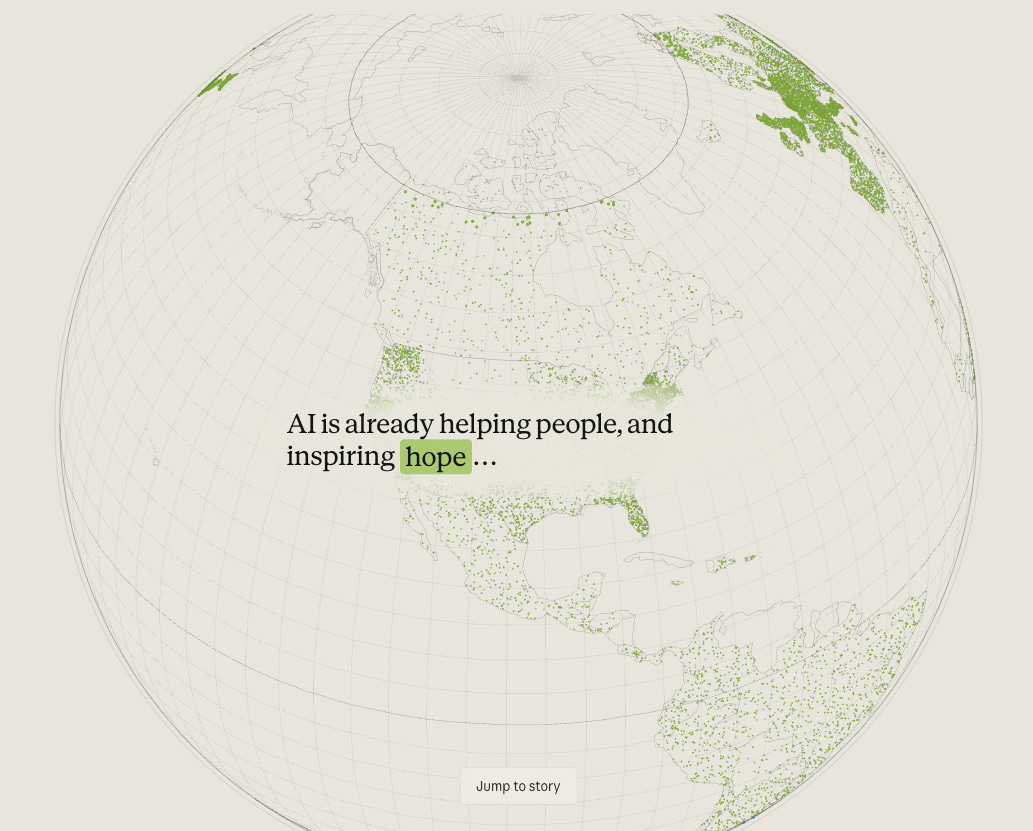
Anthropic just published findings from the largest qualitative AI study ever conducted, 81,000 interviews across 159 countries. The results are striking, showing that most people don’t just want AI to make them more productive; they want it to give them their lives back. More time with family, less mental load, financial freedom, and personal growth.
Nearly 1 in 5 respondents named professional excellence as their top desire, but dig deeper, and the real ask is simpler: help me be more human. At the same time, people are genuinely conflicted. The #1 fear isn’t robots taking over; it’s that:
AI will hallucinate and lead them astray (27%),
followed closely by job displacement (22%)
and the quiet erosion of their own ability to think (16%).
What’s most fascinating is that optimism and anxiety don’t live in separate camps; they live in the same person. The same people excited about AI as an emotional support are three times more likely to fear becoming dependent on it. The same developers celebrating time savings worry that the treadmill is just moving faster. The conflicts are between freedom and dependency, progress and loss, hope and fear.
📚Learning Corner
🧠 Core Policy + Analysis
MIT Technology Review
Deep reporting on AI regulation, including the original article and ongoing policy analysis.Brookings Institution
Research on AI governance, economic impact, and global regulatory strategies.Center for AI Safety
Focused on risks, alignment, and long-term AI policy frameworks.
The AI Regulation War Has Begun in the U.S.
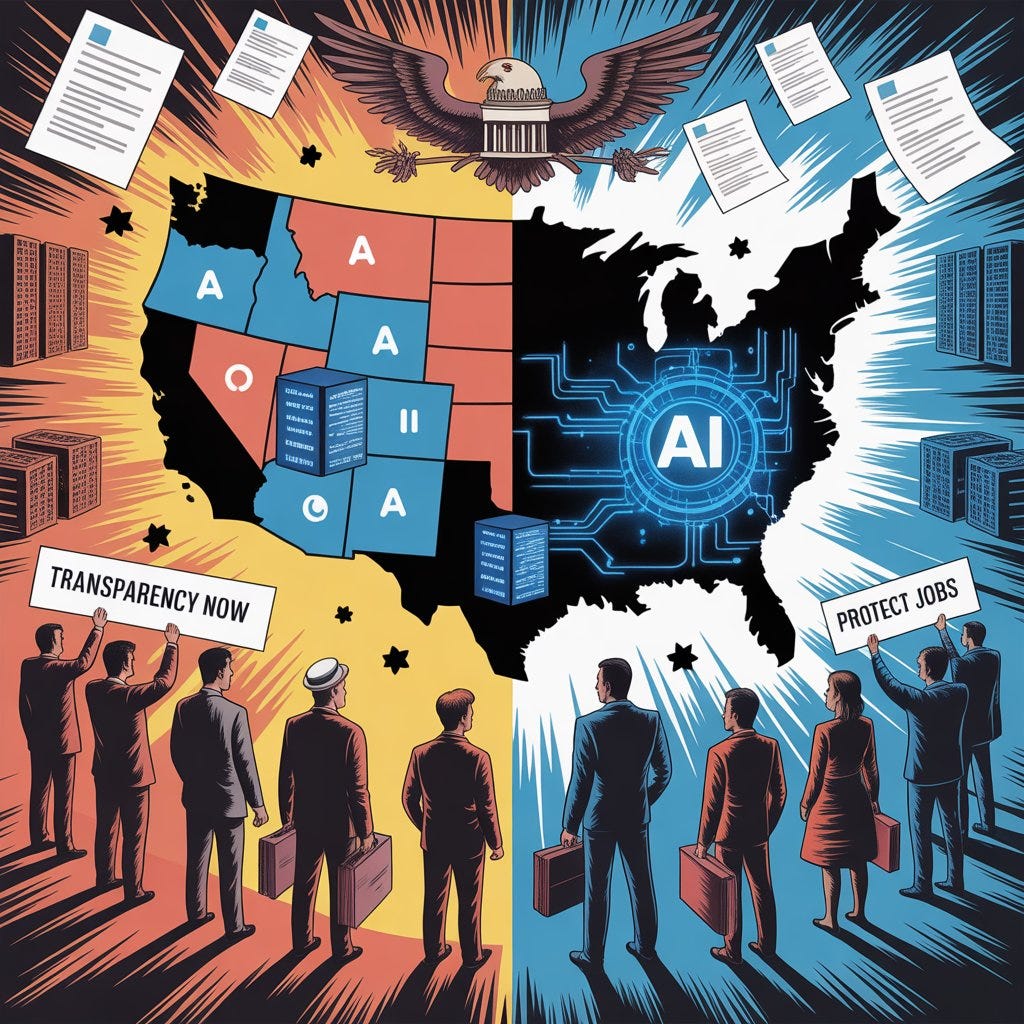
The U.S. is heading into a major AI regulation battle in 2026, as the White House pushes a light-touch national policy while states move ahead with their own rules.
After Congress failed to pass federal legislation, a sweeping executive order aims to block state-level AI laws, potentially triggering lawsuits and cutting federal funding to non-compliant states. Despite this, states like California and New York are advancing safety laws around AI transparency, bias, and catastrophic risks, reflecting rising public concern over jobs, mental health, and data center impact.
Over 1,000 AI bills were introduced in 2025, with 100+ laws passed across 40 states, signaling strong momentum. Meanwhile, billions in political funding from tech leaders and AI safety groups are turning regulation into a high-stakes political fight. Fragmented state action vs federal control could shape how AI evolves, not just in the U.S., but globally.
🧰 AI Tools of The Day
I built a local AI Labor Market Dashboard using Python and Streamlit, based on Anthropic’s March 2026 Economic Index research on which jobs are actually being disrupted by AI (not just theoretically, but in practice). It lets you explore:
Which occupations have the highest real-world AI exposure
Where hiring is collapsing for 22–25 year olds post-ChatGPT
How 10-year BLS job growth projections correlate with AI risk
A coverage gap chart showing how far actual adoption lags behind AI’s theoretical reach
The data is seeded from the paper, but the framework is wired to accept live BLS API data.
AI Is Cutting 200,000 Jobs as Banks and Big Firms Go All-In on Automation
AI-driven restructuring is accelerating across finance and professional services.
Nordea plans to cut up to 1,500 jobs (5% of staff) by 2027, taking a €190M restructuring hit to unlock at least €150M in annual savings by 2028.
HSBC is evaluating deeper cuts of up to 20,000 roles (~10% of workforce) over the next 3–5 years, targeting back- and middle-office functions, while already pursuing $1.5B in cost savings.
Industry-wide, banks could eliminate 200,000 jobs as AI automates core tasks.
Meanwhile, PwC is going “AI-first,” replacing billable-hour models with automated, subscription-based services and signaling that employees who resist AI risk being pushed out. The trend is clear for everyone: AI is no longer experimental; it’s a cost-cutting engine reshaping global workforces at scale.