

Brought to you by: Thesys

Everyone seems to be using AI these days, but adoption is not even; we share why, and who is using it more. ChatGPT rolls out a Claude feature that creates agents in seconds, and AI image generators are adding imperfections to the outputs to make them look more real.
Let’s dive in and stay curious.
AI Use at Work Is Rising, but Adoption Is Uneven
🧰 AI Tools
🛠️ AI Jobs Corner
OpenAI Rolled Out “Skills.”
AI Image generators are getting better by getting worse.
Subscribe today and get 60% off for a year, free access to our 1,500+ AI tools database, and a complimentary 30-minute personalized consulting session to help you supercharge your AI strategy. Act now as it expires in 3 days…
📰 AI News and Trends
OpenAI said to scrap the 6-month equity vesting cliff for new hires to attract and retain talent.
Nvidia considers increasing H200 chip output due to robust China demand
Seed Funding In 2025 Broke Records Around Big Rounds And AI, With US Far In The Lead
Open Evidence, a ChatGPT for Doctors Startup, Doubles Valuation to $12 Billion as Revenue Surges
Google Turns Gemini Deep Research Into a Programmable Agent With Gemini 3 Pro
New York’s new law forces advertisers to say when they’re using AI avatars
Other Tech News
SpaceX sets $800 billion valuation, confirms 2026 IPO launch
Google Translate now lets you hear real-time translations in your headphones
Could the Brain Be Reading Its Own Magnetic Field?
The SEC was tough on crypto, but the new administration makes it an easy ride.
People Are Already Taking This Unapproved New Weight-Loss Drug
Turn your n8n workflows into intelligent AI apps in minutes.

C1 by Thesys turns any n8n workflow into a smart, adaptive AI app - with interactive UIs instead of walls of text. From chatbots to AI agents for research, analytics, or automation, no coding and no changes to your workflow logic. Thesys is the UI your n8n workflows have been missing.
AI Use at Work Is Rising, but Adoption Is Uneven

The use of AI in the U.S. workplace continues to rise. In Q3 2025, 45% of employees reported using AI at work at least a few times a year, up from 40% in Q2. Frequent use jumped faster, from 19% to 23%, while daily use remains limited at ~10% of the workforce.
Who’s using AI the most
Technology: 76% use AI at least occasionally
Finance: 58%
Professional services: 57%
Frontline-heavy sectors lag: Retail (33%), Healthcare (37%), Manufacturing (38%)
Organizations are split on AI adoption
37% say their company has implemented AI
40% say it has not
23% don’t know — signaling weak internal communication. Individual contributors were 4x more likely than leaders to say they’re unsure.
What employees use AI for
Consolidating information: 42%
Generating ideas: 41%
Learning new skills: 36%
Tools: Chatbots (60%+), writing/editing tools (36%), coding assistants (14%)
Over two years, AI use at work has nearly doubled (from 21% in 2023 to 45% in 2025). But adoption is still concentrated in white-collar roles, and guidance lags execution. While 44% of organizations are integrating AI, only 22% have clearly communicated a plan.
AI is spreading fast, but without a clear strategy and manager support, most employees are still experimenting on their own, and daily AI use remains far from mainstream.
🛠️ AI Jobs Corner
Apply Today - Open Positions.
First-Line Supervisors of Productions and Operating Workers
Computer and Information Systems Managers
OpenAI Rolled Out “Skills”
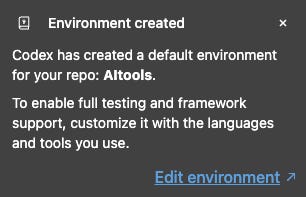
OpenAI introduced Skills, a lightweight way for AI to follow reusable, file-based instructions. Skills are live in ChatGPT (Code Interpreter) and the Codex CLI.
BUT, What is a Skill?
A skill is simply a folder with a Markdown file that explains how to do a task, plus optional scripts or docs. No APIs or plugins needed. If the model can read files, it can use the skill.
How does it work?
ChatGPT now has a hidden /home/oai/skills directory. When handling PDFs, spreadsheets, or DOCX files, it reads the relevant instructions, follows them step by step, and self-checks outputs. For PDFs, it even converts pages to images and re-renders until formatting is correct, which is why some jobs take 10+ minutes.
Codex CLI = programmable agents
In Codex, any folder in ~/.codex/skills becomes a skill. With --enable skills, Codex can list and apply them automatically, turning it into a local AI agent with domain memory.
Skills bring standardization, reuse, and reliability to AI workflows. They’re simple, tool-agnostic, and agent-ready—and may end up more impactful than plugins as AI moves toward real production agents.
AI Image generators are getting better by getting worse.

AI image generators are getting more realistic by adding imperfections, not removing them. They have gotten too good at creating perfect images which do not exist in our imperfect world. Instead of glossy, flawless images, new models mimic clutter, bad lighting, camera noise, and even the processing quirks of smartphone and security cameras.
Tools from Google, Adobe, Meta, and OpenAI now copy how we record reality, which helps AI sidestep the uncanny valley and makes fakes harder to spot. The problem: verification is lagging. Standards like C2PA Content Credentials can label images as AI or real, but adoption is still limited.
AI images look more believable by looking worse, and our ability to tell what’s real is falling behind.
🧰 AI Tools of The Day
Search our large AI tools Database of over 1000 tools for free.